Appointment Preparation
Contact Lens Wearers
Patients should refrain from wearing contact lenses for an extended period leading up to their pre-op appointment.
Soft contact lenses: 1-2 weeks
Hard contact lenses: 2-3 weeks
Historically, patients should refrain from wearing hard contacts for 1 week per every decade worn.
Realistically, these patients usually must refrain from using hard lenses for 2-3 weeks.
DES | Dry Eye Syndrome
Dry eye symptoms and ocular surface should be assessed and optimized prior to pre-op appointment.
Regimen should be continued post-operatively
- Pause for the first 1-2 weeks after surgery if multi-use drop bottles are used.
(prevent contamination)
Relevant Ocular History
Refractive History
Surgery
Name of procedure
And complications encountered
Obtain original
- Refraction
- Keratometry readings
Manifest Refraction (MR) history
- Stable vs changing
Since refractive surgery, prior to cataract onset
Evaluate current topography & tomography
- To confirm patient reported history.
Astigmatism + Refraction
Read most recent glasses prescription via lensometer.
Myopic + Hyperopic Changes
Myopic shift:
Assess NSC as potential etiology.
Hyperopic shift:
Check for clinically significant macular pathologies via OCT.
(eg, edema, retinoschesis, central serous retinopathy.)
Intraocular History
Increased posterior capsule fragility
→ Increased risk of intraoperative break.
- Intravitreal injections
- Scleral buckle
- Vitrectomy
- Intraocular silicone
Nystagmus
General anesthesia recommended
- Reduces risk of intraoperative challenges.
Disease History & Zonulopathy Asessment
Initial zonulopathy evaluation should be done in a non-dilated eye
Cycloplegics increase zonular tension and cause a falsely reassuring exam.
Ocular Trauma
Ocular Trauma
Exam Findings
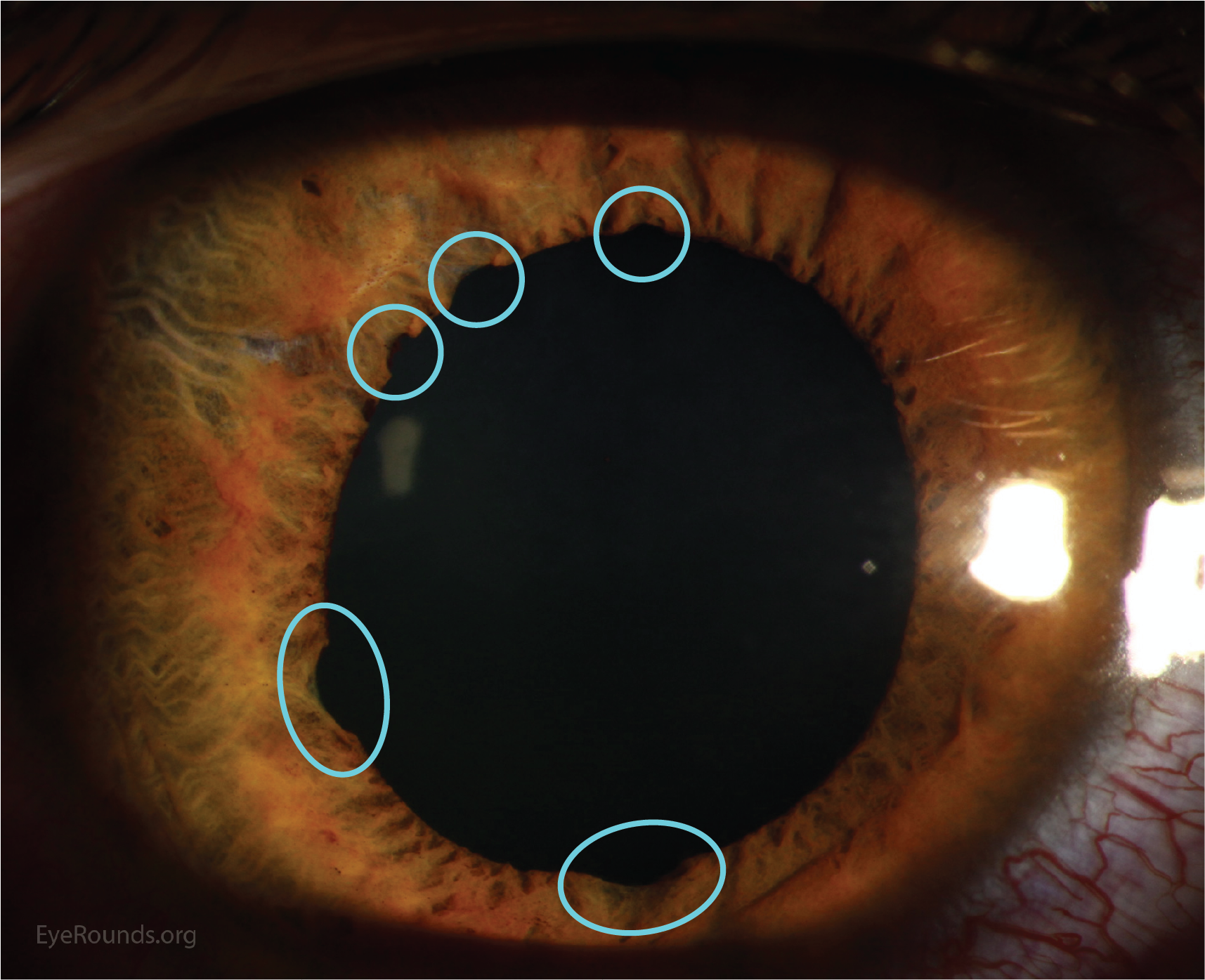
Sphincter pupillae damage.
Vislisel J MD. Traumatic Iris Sphincter Tears, EyeRounds. University of Iowa.
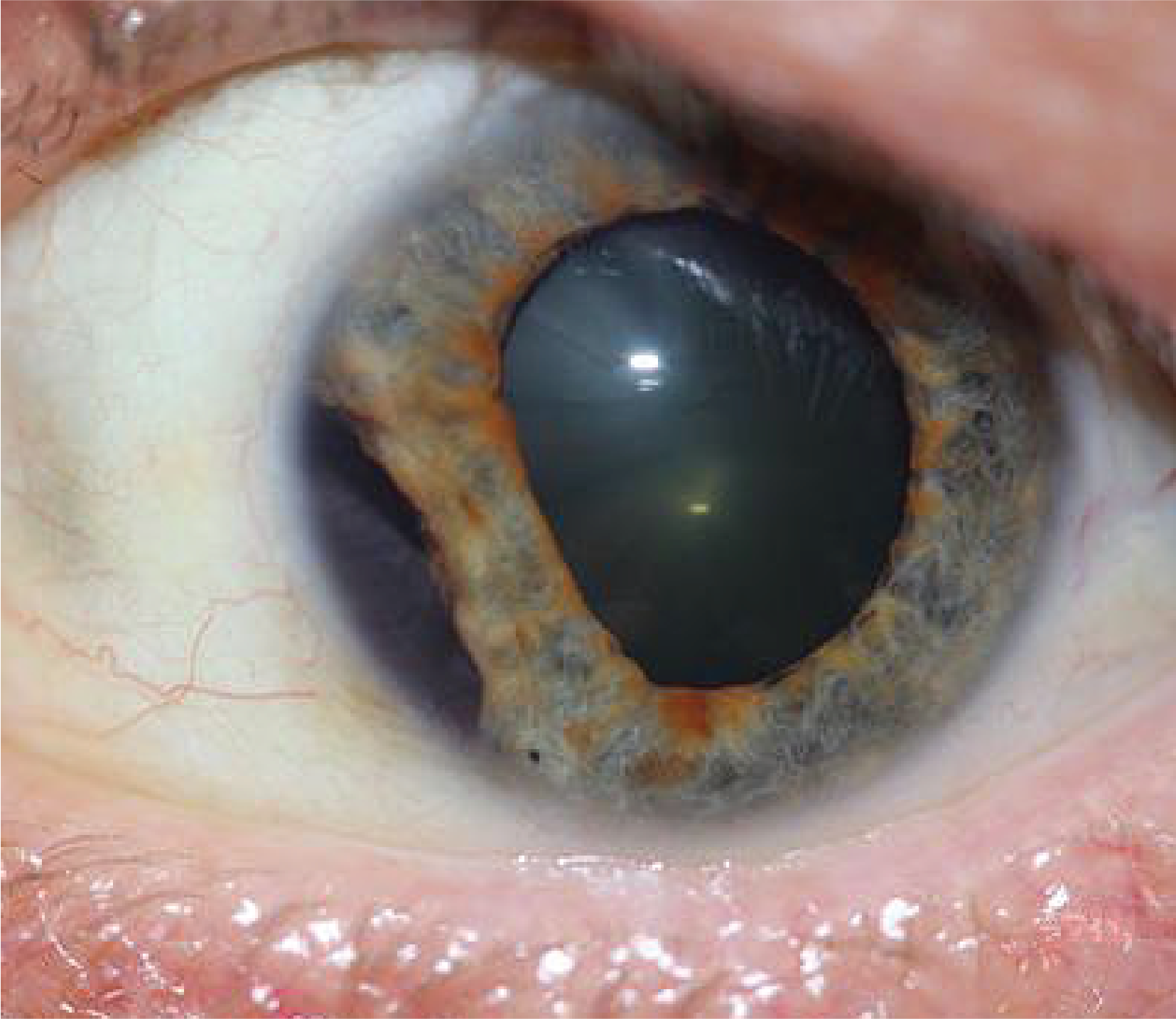
Iridodialysis.
Phillips H MD et al. Seven Rings of Trauma. EyeWiki.
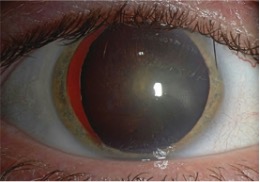
Crescent zone of clearing due to traumatic zonular damage.
Steinert's Cataract Surgery 2023

Angle recession.
Green bar = Angle Recession; Black bar = Trabecular Meshwork.
Brenner J MD et al. Angle Recession Glaucoma. EyeWiki.

Cyclodialysis cleft.
Ciliary body muscle fiber separation from scleral spur.
Mansoor M, MD. Cyclodialysis Cleft. EyeRounds. University of Iowa.
Pigmentary Dispersion Syndrome
- Mid-peripheral TIDs.
- Result of concave iris.
Pigmentary Dispersion Syndrome
Etiology
- Autosomal Dominant inheritence with incomplete penetrance
Risk Factors
- Male
- Myopia
- Concave iris and posterior insertion
- Flat cornea
- Family history
Relevent Sequelae
- Pigmentary glaucoma (2º OAG)
Exam Findings
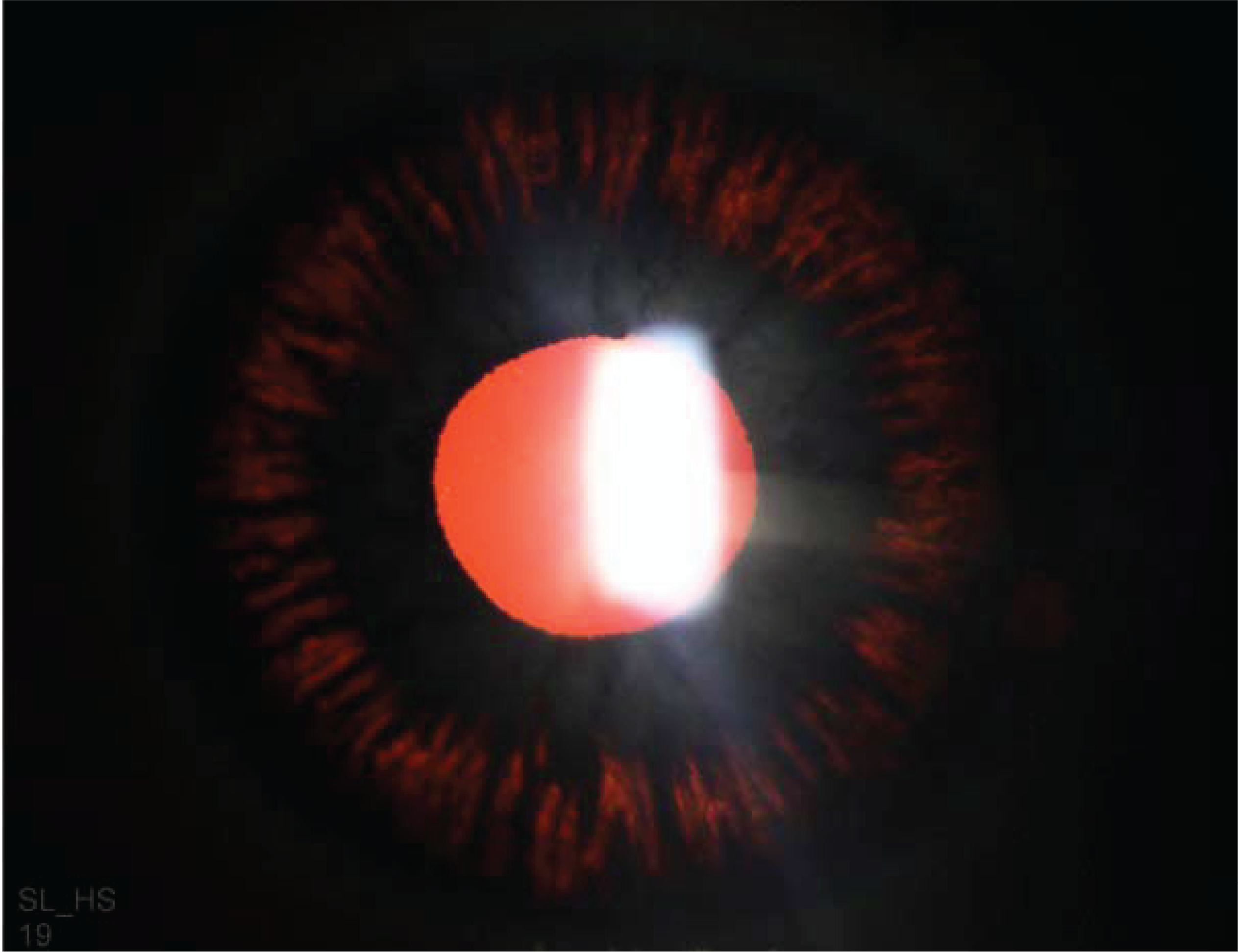
Mid-peripheral Trans Illumination Defects (TIDs)
Hagar J MD, Alward W MD. Pigmentary Glaucoma. EyeRounds, University of Iowa.
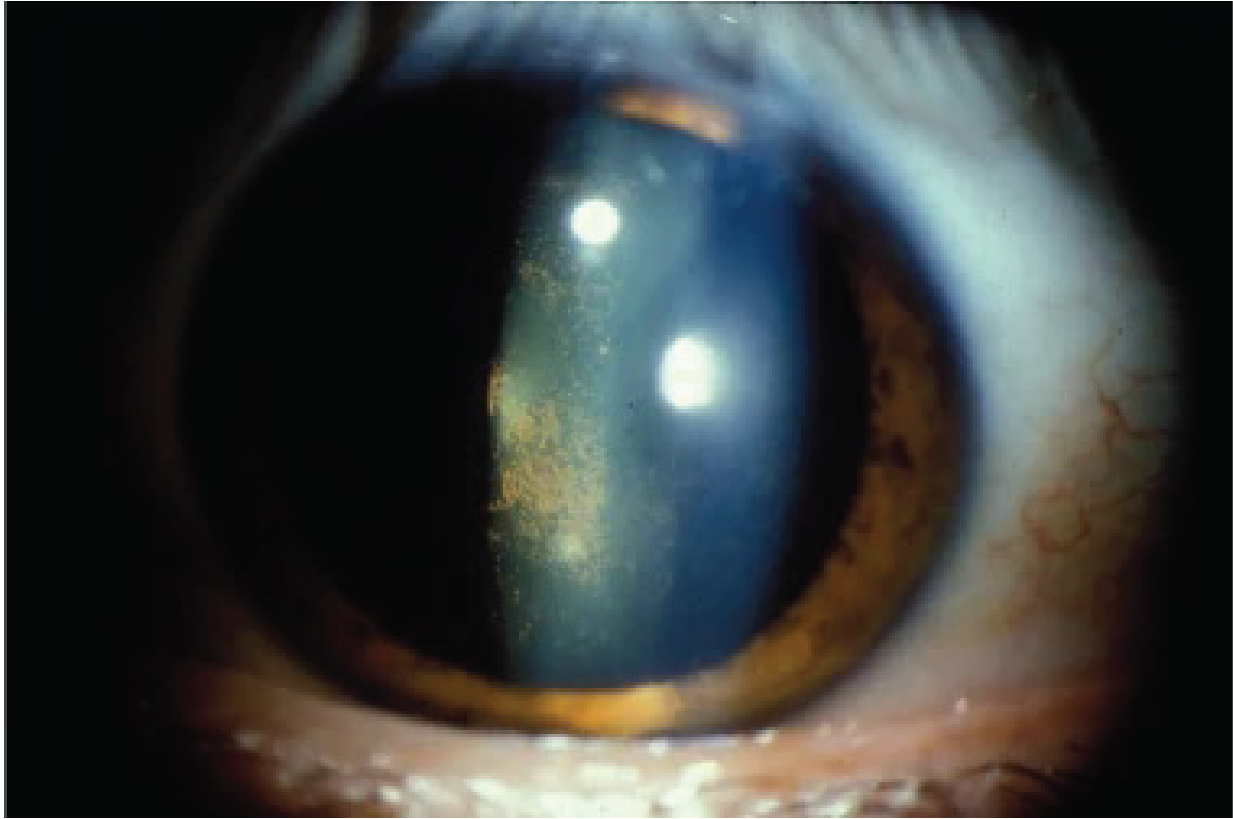
Corneal endothelium with pigment deposition
Blieden L MD. Pigmentary Glaucoma Clinical Presentation. MedScape. Mar 2025.
Uveitis
- 3-6 months of quiet and controlled inflammation prior to surgery.
Anterior Uveitis
Risk Factors
Autoimmune
- Sarcoidosis
- Rheumatoid Arthritis
- Multiple Sclerosis
- Behcet's Disease
- Vogt-Koyanagi-Harda (VKH)
- Ankylosing Spondylitis
- Irritable Bowl Disease
Infections
- HSV/VSV
- Syphilis
- TB
- Toxoplasmosis
Relevent Sequelae
- Keratopathy
- Posterior Synechiae
- Zonulopathy
Exam Findings

Keratic precipitates
Forming the classic finding of Arlt's triangle

Posterior Synechiae
Preventing normal pupillary dilation.
Jesse Vislisel, MD. CPS iso TINU. EyeRounds, University of Iowa.
Management Considerations
- May need to perform synechiolysis concurrently with cataract surgery
- Consider intraoperative steroid depot injection or oral steroid perioperatively.
- Depending on severity/etiology of uveitis.
Pseudoexfoliation Syndrome
- Pupillary border TIDs.
- Causes zonulopathy.
Pseudoexfoliation Syndrome
Risk Factors
- Age >70 yo
- Certain populations (Scandinavian)
Relevant sequelae
- Zonulopathy/zonular dialysis
- Glaucoma or optic nerve cupping
- Drop nucleus/lens fragments
- Anterior chamber fibrinoid syndrome
(fibrin strands/membranes form in anterior chamber)
- Anterior capsular contraction
(fibrosis/phimosis)
Exam Findings
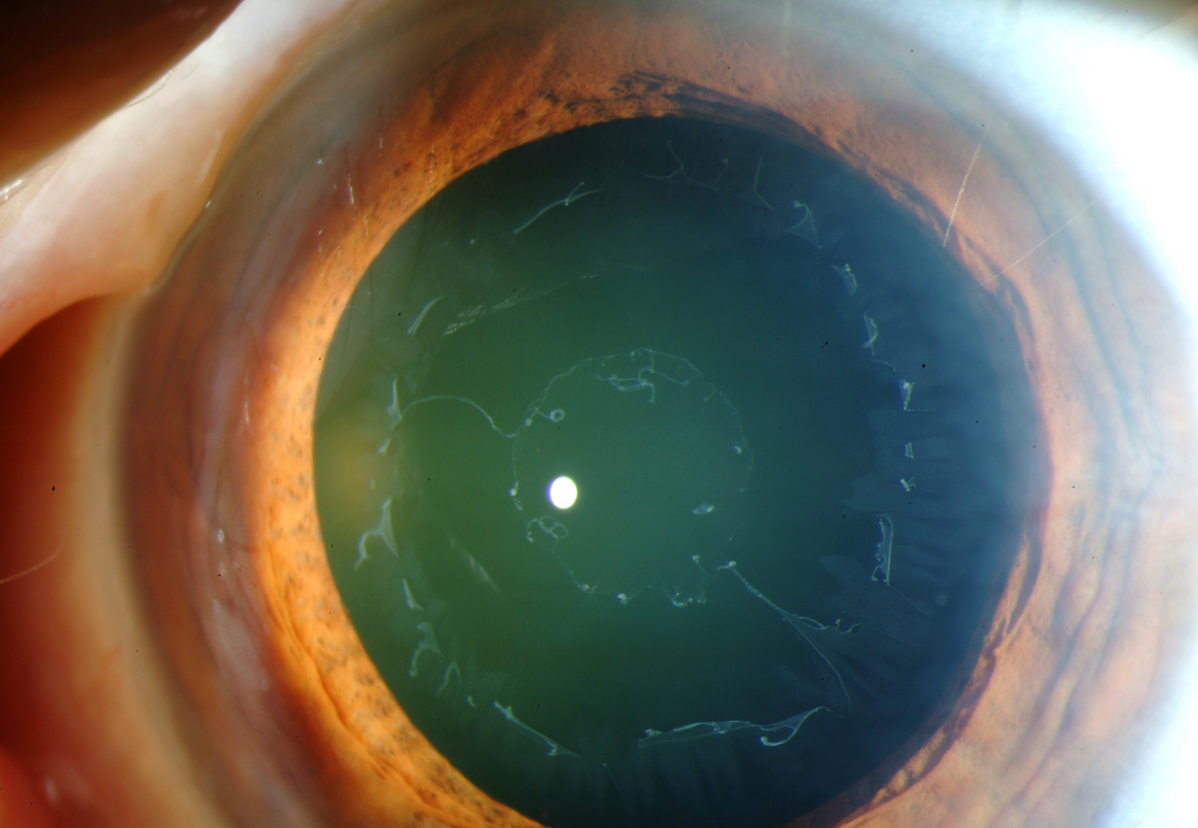
Pseudoexfoliation deposits on anterior lens capsule.
Courtesy of Bowes Hamill, MD. Steinert's Pathology of the Cataract.
Additional Exam Asessments
A thorough exam assessing all ocular co-morbidities reduces the chances of complications and ensures optimized outcomes.